Romistia: A Monoline Script Font for Handmade Labels, Printables, and Shop Branding
The first time I pulled Romistia into my design software, I was sitting at my kitchen table with a stack of blank kraft labels, a fresh candle I’d just poured, and a growing pile of packaging supplies that needed to feel cohesive. I had tested half a dozen script fonts that week, but nothing seemed to strike the balance between elegant and readable. Then I typed a single word—Rosewood—in Romistia, and something clicked. The letterforms flowed together like fine ink on paper, each stroke clean and deliberate, with just enough lift to feel handwritten without looking messy. I printed a test label, trimmed it, and wrapped it around the candle jar. It looked like something you’d find in a boutique that pays attention to every detail. And that was the moment I knew Romistia was going to become a staple in my shop.
What Makes Romistia Stand Out as a Monoline Script
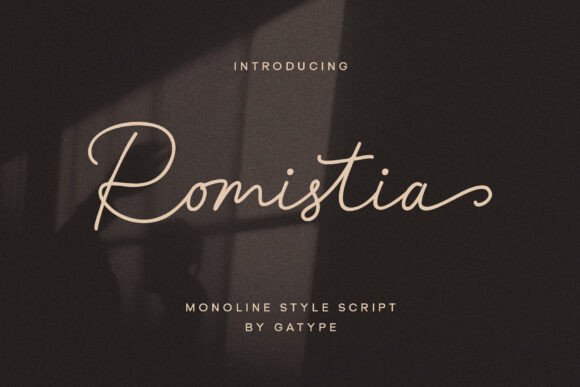
Romistia is a monoline script font, which means the stroke width stays consistent throughout each letter. That might sound technical, but in practice it gives the font a smooth, even rhythm that feels both elegant and approachable. The letters are designed with fine, neat strokes and a refined touch that reminds me of calligraphy practiced over years. There is a lightness to it, a kind of airy luxury that doesn’t feel heavy or overdone. Every character carries a sense of intention, which is exactly the feeling I want when I’m labeling handmade products or designing printable wall art for my shop.
Because the strokes are monoline, Romistia reads clearly even at smaller sizes. That is a practical advantage when you are printing candle labels that wrap around a narrow jar, or adding a short phrase to a sticker sheet where space is tight. The font retains its character whether you use it on a tiny hang tag or blown up large for a welcome sign. That versatility makes it feel like a smart investment for anyone creating physical products or digital downloads.
Using Romistia on Handmade Labels and Product Packaging
If you make and sell physical goods, you know how much packaging matters. A label can elevate a simple candle, a bar of soap, or a jar of bath salts into something that feels gift-worthy. I have used Romistia on kraft paper labels for my soy candles, and the contrast between the warm brown paper and the graceful script creates a look that feels rustic but refined. The font is especially effective for short product names like Vanilla Bean, Lavender Fleur, or Sea Salt Drift. Each word sits beautifully on its own, and the letters connect naturally without crowding.
For packaging, I pair Romistia with a simple sans serif font for ingredients or scent notes. The sans serif does the heavy lifting of readability, while Romistia provides the emotional appeal. That pairing works well on product tags too. I print small oval tags with the shop name in Romistia and staple them to linen bags or tie them around glass jars. The font gives the whole package a handmade, artisanal feel that customers notice. It tells them someone cared enough to choose a typeface with personality.
Wedding Invitations and Celebration Stationery
Romistia has become one of my go-to choices when I design wedding invitation suites or celebration stationery for clients. Because the font has that fine handwritten quality, it works beautifully for the couple’s names on the cover of a card or for a phrase like Together with their families on the inner page. I keep the wording short—just names, a date, or a short header—and let Romistia do the visual work. For the body text, I switch to a clean serif or a light sans serif so the invitation stays readable at a glance.
What I appreciate is that Romistia does not look overly ornate. Some script fonts are so swirly they become difficult to read on printed cards, but Romistia stays legible without losing its elegance. That makes it a strong choice for DIY invitation makers and small stationery shops. Whether you are designing for a wedding, a birthday, or a baby shower, the font brings a sense of occasion without screaming for attention.
Printable Wall Art and Digital Downloads
For anyone creating printable art, Romistia is a natural fit. I have used it on typography prints with quotes like Live simply, Dream big, and Home is where the heart is. The monoline strokes translate well to both digital previews and printed copies. When I upload listing images for my printables, the font looks clear in thumbnails and even better when the customer zooms in. That matters because buyers want to see exactly what they are getting.
I also use Romistia for planner pages and sticker sheets. Short headers like Weekly Goals or Gratitude sit nicely at the top of a page, and the font pairs well with simple line icons or hand-drawn borders. For sticker makers, Romistia works well on name labels, pantry labels, and motivational phrases. The fine strokes cut cleanly on a cutting machine, and because the letterforms are not too thin, they hold up well when applied to notebooks, water bottles, or storage bins.
Readability Tips for Cutting Machines and Small Prints
If you use a cutting machine like Cricut or Silhouette, you will want to test Romistia at your intended size before committing to a large batch. In my experience, the font cuts beautifully at sizes around 1.5 inches and above. For very small stickers or tiny labels, I increase the tracking slightly so the letters have a little breathing room. That small adjustment keeps the script legible and prevents the cut lines from merging together.
For printed products like greeting cards or product tags, Romistia prints cleanly at standard sizes. I recommend testing a sample on your printer and paper stock before producing in quantity. The font’s even stroke width means it behaves predictably across different papers, from smooth cardstock to textured watercolor sheets. That reliability saves time and materials, which is always welcome in a small shop.
Font Pairing Ideas That Work with Romistia
Romistia pairs naturally with a range of other typefaces. For a modern contrast, I use a clean sans serif font like Montserrat or Lato for secondary text. That combination works well on product packaging, listing images, and social media graphics. When I want a softer, more romantic look, I pair Romistia with a light serif font. The two styles complement each other without competing, and the result feels polished and intentional.
For boutique branding, Romistia can stand alone as the main display font on a logo or shop name. I have seen it used beautifully on tote bags and signage, where a single word or short phrase becomes the focal point of the design. The font has enough personality to carry a brand identity without needing extra ornamentation. That simplicity is part of its charm.
Checking Styles, Licensing, and Commercial Use
Before you start selling products made with Romistia, take a moment to review the included font files. Some versions of the font come with alternate characters, ligatures, or swashes that give you more creative control. I always open the full character set in my design software to see what is available. Alternate letters can give your designs a custom feel, especially when you are working on a logo or a monogram.
Commercial licensing is another important step. If you plan to sell physical products like candles, mugs, shirts, or tote bags with Romistia text, confirm that the license covers commercial use. The same applies if you sell digital downloads such as printables, templates, or editable invitations. Most premium font licenses at Script Amp and similar font foundries include clear terms for physical products and digital artwork, but it is always wise to read the details. Knowing your license protects your shop and your creative work.
Bringing Romistia into Your Creative Workflow
Romistia has become one of those fonts I reach for when I want a project to feel intentional, elegant, and handmade. It works across so many formats—candle labels, invitation headers, printable wall art, sticker sheets, and boutique packaging—that I keep it loaded in my font manager at all times. Whether I am designing a mockup for a new listing or testing a label for a seasonal product, the font delivers a consistent, beautiful result.
If you run a small shop, sell printables, or create handmade goods, I encourage you to test Romistia on one of your current projects. Type a product name, a shop tagline, or a short quote. Print it at the size you would use on your actual product. See how it feels in your hands. That moment, when a font stops being just a file on your computer and starts being part of something you make and sell, is exactly where the creative fun begins.